|
|
|
|
|
|
|
|
|
Hello ,
As we move through Movement May, I keep coming back to the idea that movement is not just exercise. I have been revisiting my own relationship with movement. I’ve noticed my own consistent movement practice has slipped recently, and finding my way back into a steady rhythm has felt more challenging than expected. This past week I began to shift my personal narrative around movement and just began with small steps forward. Already, I can feel a positive shift , more energy, more clarity, and a greater sense of connection to myself.
Movement is information and communication for the body. Movement supports circulation, lymphatic flow, mitochondrial health, mood, digestion, sleep, and nervous system regulation. It is one of the most foundational ways we remind the body that it is safe, adaptable, and alive.
This month, rather than focusing on intensity or perfection, I invite you to focus on consistency and relationship.
What type of movement helps you feel more connected to yourself afterward?
A walk outside after dinner, gentle stretching before bed, strength training, gardening, yoga, dancing in the kitchen, it all counts!
The healthiest movement practice is often the one that feels sustainable in your real life.
Small, repeated inputs create change over time.
With Ease,
~ Lynn 🌈 |
|
|
|
|
|
Weekly MEMBER ONLY WEEKLY emails are a place to get ISH Member updates, most current happenings, a place to connect and tap in weekly to your health intentions. |
|
|
|
Upcoming ISH Closures |
|
May 20-25
When ISH is closed, I do not monitor Charm messages and will respond to messages when I return. Please follow up with PCP, Urgent Care or ER for urgent matters. |
|
|
|
|
MEMBER CORNER |
|
|
|
Do you have something to share with your fellow ISH Members?
Add it HERE and we will share with members in our weekly member email. |
|
|
|
|
|
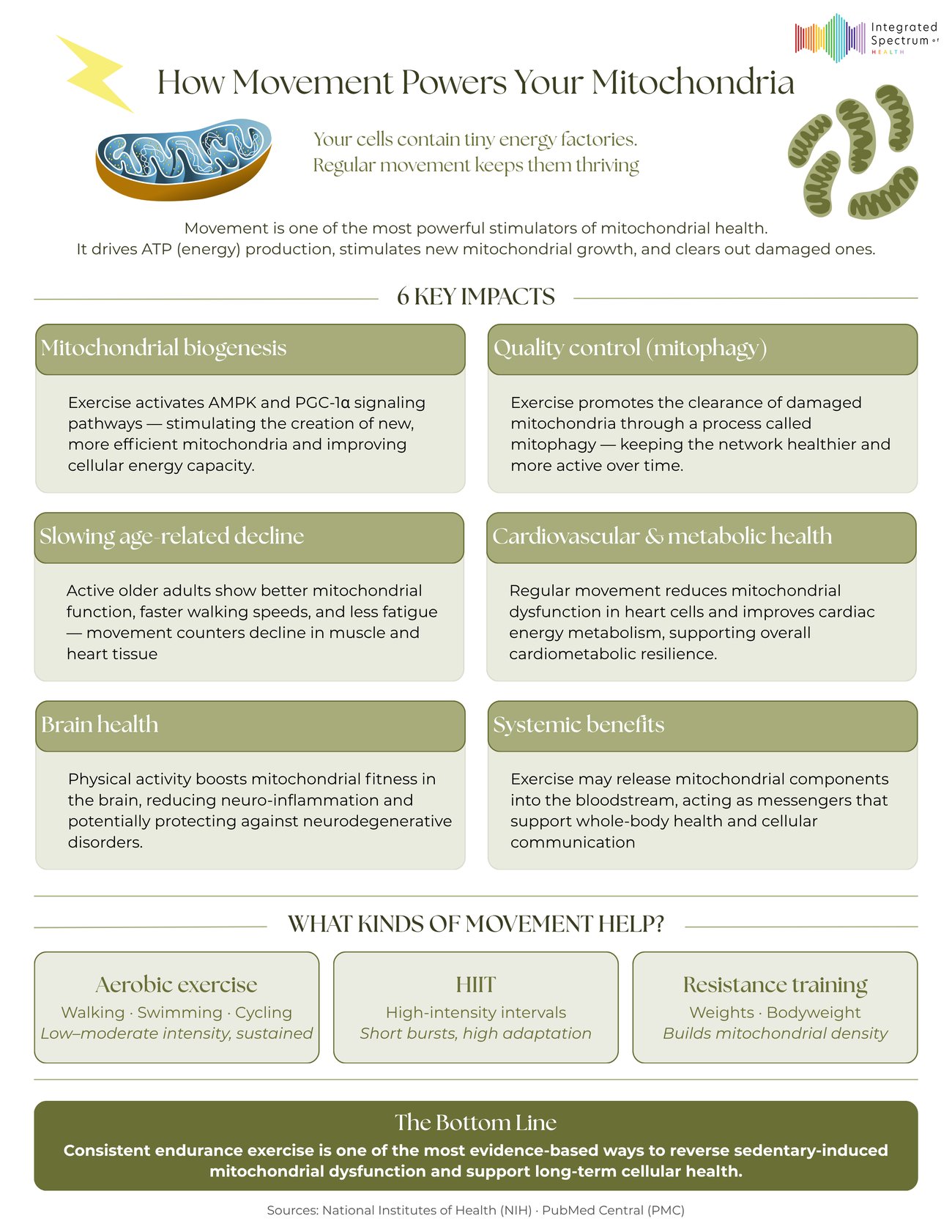
At the cellular level, movement directly impacts your mitochondria — the structures inside your cells responsible for producing energy. When you move regularly, you signal to your body to create more mitochondria and improve their efficiency.
This is why people who move consistently often report feeling more energized, not more depleted. The right kind of movement — moderate, regular, and sustainable — actually increases your capacity for energy over time.
It's also worth noting that mitochondrial dysfunction is a common thread in many chronic health conditions. Supporting mitochondrial health through movement isn't just about fitness. It's a foundational part of functional healing.
You don't need intense cardio to activate this response. Walking, gentle cycling, swimming, yoga — these all send meaningful signals to your cells.
|
|
|
|
|
|
This week, experiment with low-to-moderate intensity movement when you're feeling a dip in energy — rather than reaching for caffeine or rest first.
Even a 10-minute walk can shift your cellular energy in a meaningful way.
Pay attention to how you feel before and after.
|
|
|
|
|
|
May 12th Group Visit Replay |
|
Movement is Medicine |
|
Watch the replay 👇👇 |
 |
|
|
|
|