|
|
|
|
|
|
|
|
|
Hello ,
If you're a member here, you're already someone who shows up for their health. Whether that's adjusting what's on your plate, prioritizing sleep, or simply keeping your appointments with Lynn. You're building habits that compound over time, and that's no small thing.
This month I want to highlight one more habit that can quietly make your care even better, completing your pre-visit questionnaires. I'll share what they actually do, why they matter more than you might expect, and how to make them second nature.
Hailey
ISH Patient Care Coordinator |
|
|
|
|
|
On the last Friday of each month I send a HELP WITH HAILEY member email to answer commonly asked questions, give tips, and explain ISH membership benefits and policies. |
|
|
|
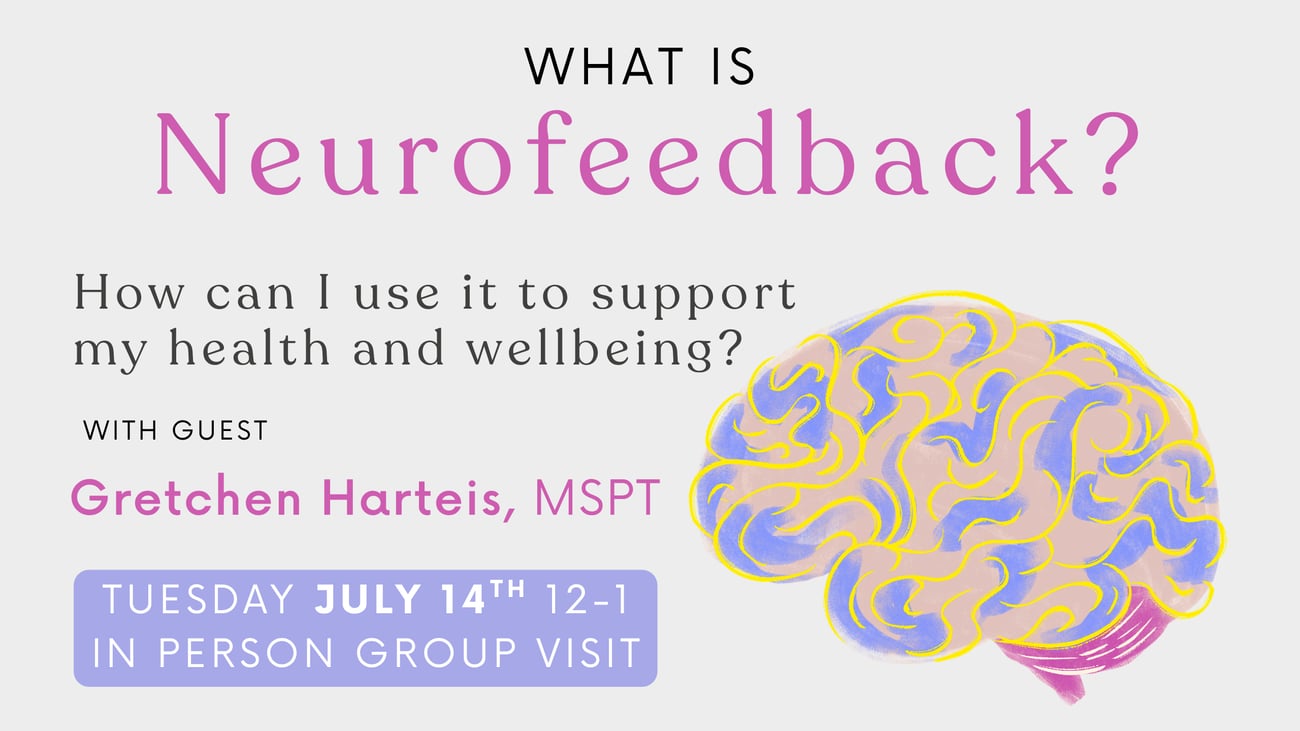
Don't miss our July 14th group visit with Gretchen Harteis |
 |
|
|
|
|
|
Pre-Visit Questionnaires |
|
Every Friday before your visit, two short questionnaires land in your Charm portal
Pre-visit Questionnaire and the MSQ (Medical Symptoms Questionnaire)
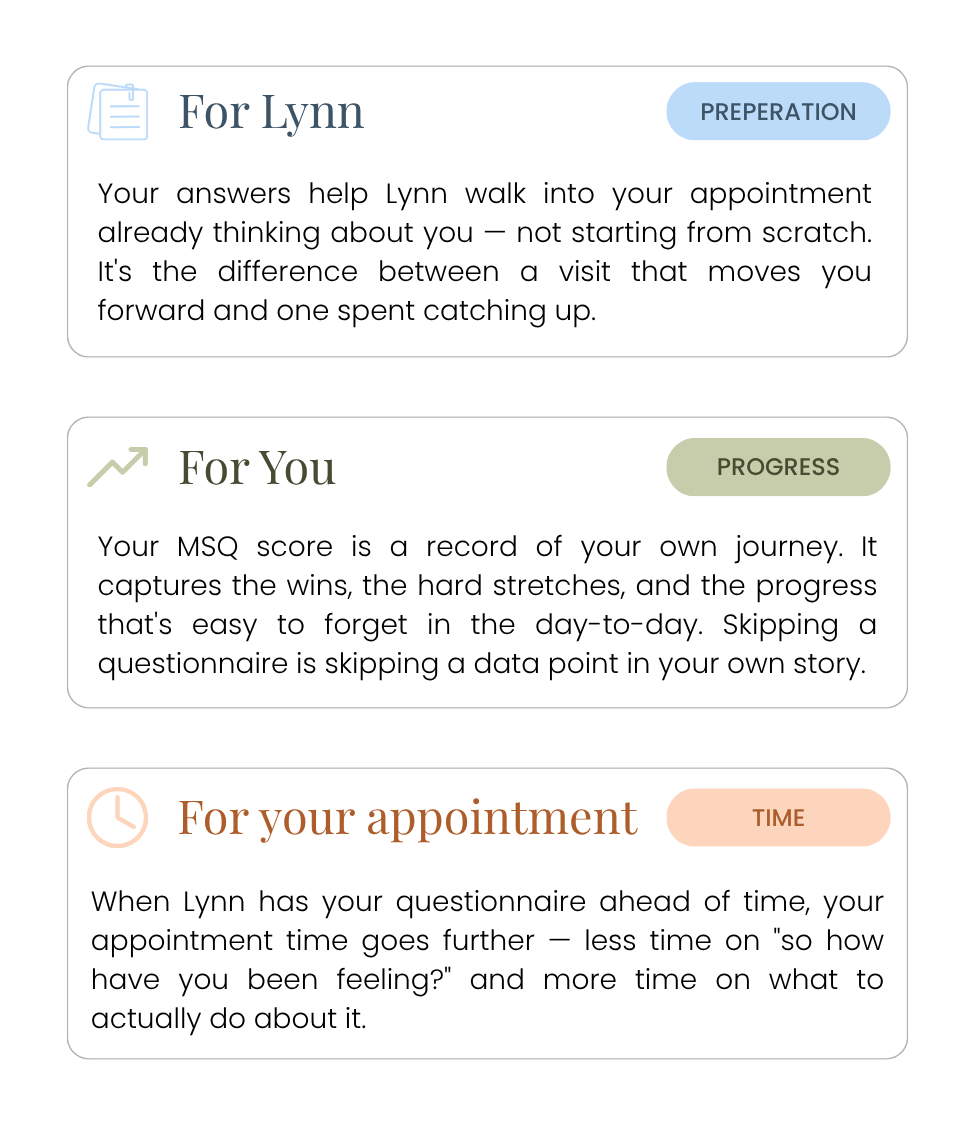
They take less than 10 minutes, but they do a lot of heavy lifting: they let Lynn come to your appointment prepared for you specifically, and they track your MSQ score over time so you can both see the arc of your progress.
Your MSQ score isn't just a number — it's a record of how far you've come. When you skip it, that snapshot disappears. When you fill it out, you're building something to look back on.
|
 |
|
|
|
Making it a habit: try stacking it
|
|
One of the most effective ways to build a new habit isn't willpower, it's placement. Try habit stacking: anchoring a new behavior to something you already do automatically, so the existing habit becomes the trigger.
The formula is simple: "After I [current habit], I will [new habit]."
For your pre-visit questionnaires, it might sound like:
-
"After I make my Saturday morning coffee, I'll open my Charm portal and fill out my questionnaires."
-
"After I see the Friday reminder email arrive, I'll complete them before I close my inbox."
The key is specificity. A vague intention ("I'll do it this weekend") is much easier to sidestep than a behavior tied to a specific moment. Research published in the British Journal of Health Psychology found that people who planned exactly when and where they would perform a new behavior were significantly more likely to follow through than those who simply intended to.
Your questionnaires arrive on Friday the week before your appointment, same day, same place, every time. That consistency is an asset to supporting you to achieve your health goals. Use it as your anchor.
|
|
|
|
|